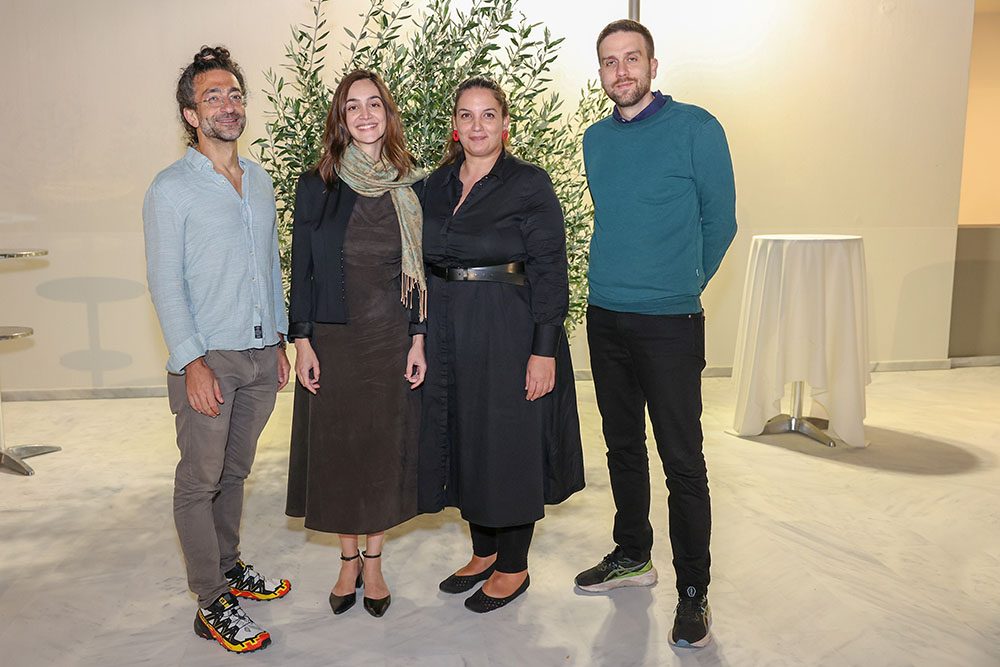
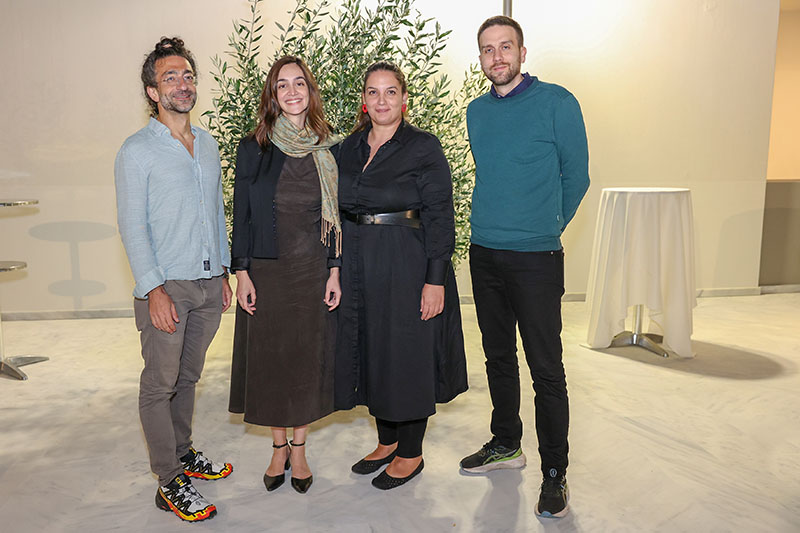
A day dedicated to ancient biomolecules, scientific discovery, and new perspectives on our shared human past took place on the 9th of October at the new Auditorium of the Innovation and Advanced Education Hub of Foundation for Research and Technology - Hellas (FORTH).
The 2026 Kafatos Lecture, organized by EMBL in honor of Fotis Kafatos, distinguished Greek biologist and founding Director of the Institute of Molecular Biology and Biotechnology at FORTH (IMBB-FORTH), brought together world-leading researchers to explore how ancient DNA and proteins are transforming our understanding of human origins, population history, and health.
The day began with the International Symposium on Ancient Biomolecules, ‘Unfolding Our History Through Ancient Biomolecules’, organized by Dr. Eirini Skourtanioti, Group Leader at IMBB-FORTH, and moderated by Nena Galanidou, Professor of prehistoric archaeology, University of Crete.
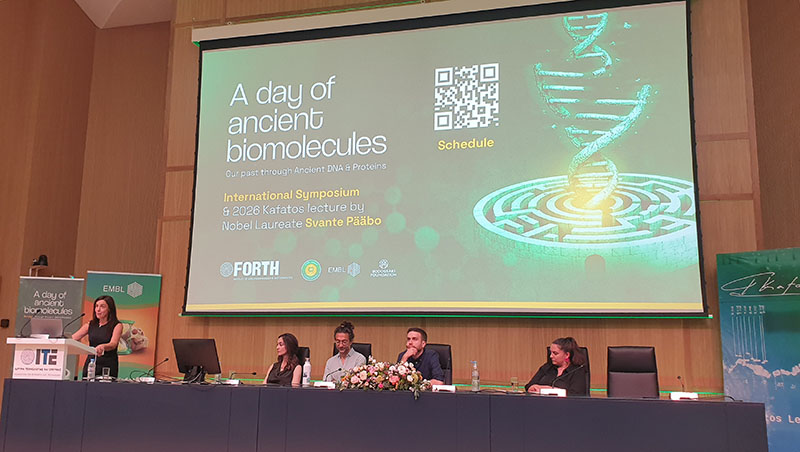
The symposium showcased exciting advances across the field:
Eirini Skourtanioti presented how genomic and archaeological evidence can be combined to reconstruct the history of human populations in the Mediterranean, shedding light on past health, host genetics, and social organization.
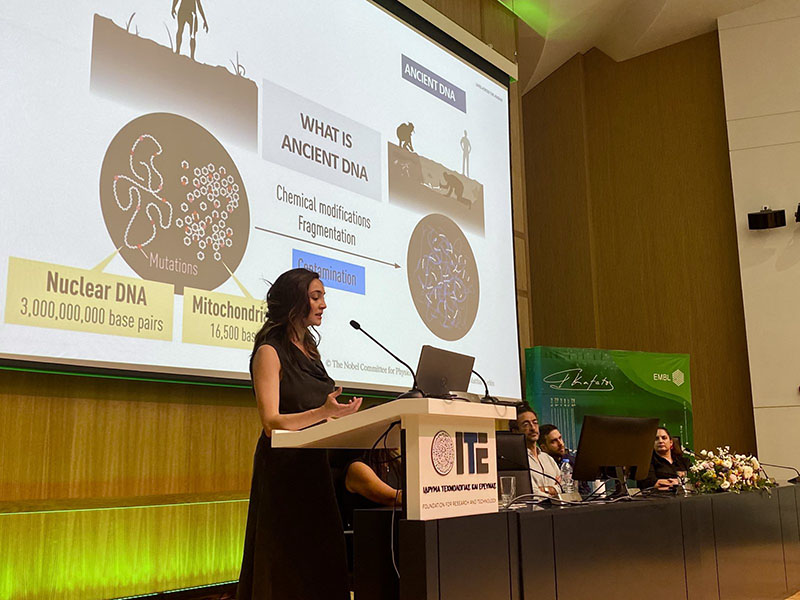
Mehmet Somel, Professor of Biology at Orta Doğu Teknik Üniversitesi / Middle East Technical University (METU), Ankara, explored Anatolian population history and social dynamics of prehistoric societies.
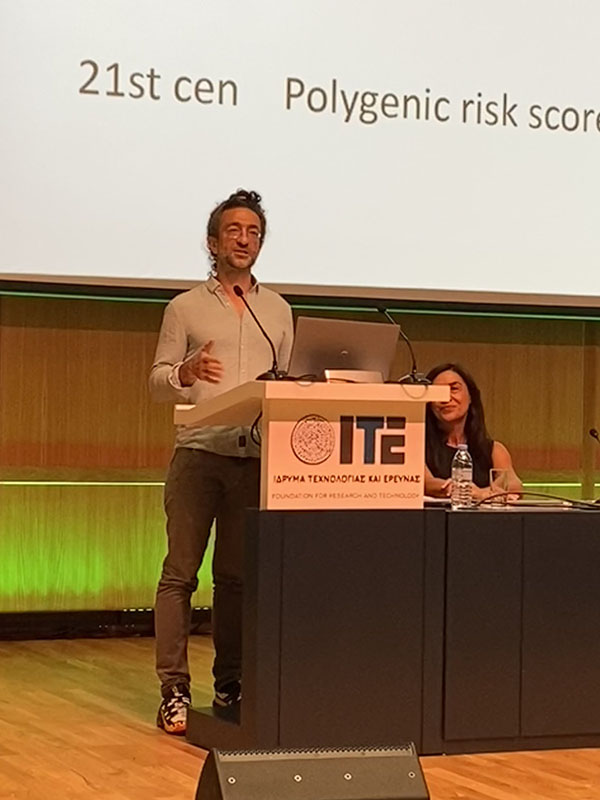
Pontus Skoglund, Senior Group Leader and Associate Research Director at the The Francis Crick Institute discussed the evolution of humans and pathogens during major prehistoric and historic population movements as well as the genomic processes underlying dog domestication.
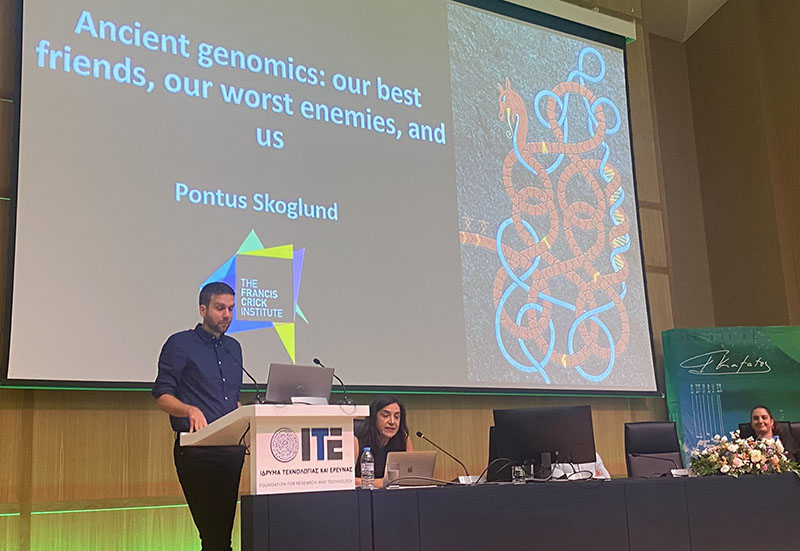
Katerina Douka, Associate Professor of Archaeological Science at the University of Vienna, described biomolecular methods from radiocarbon dating to ZooMS, a novel method of paleoproteomics. She highlighted how the use of collagen fingerprinting helped to identify hominin fossils in northern Eurasia how it can be used to expand palaeoproteomic and archaeological research across Africa and Oceania.
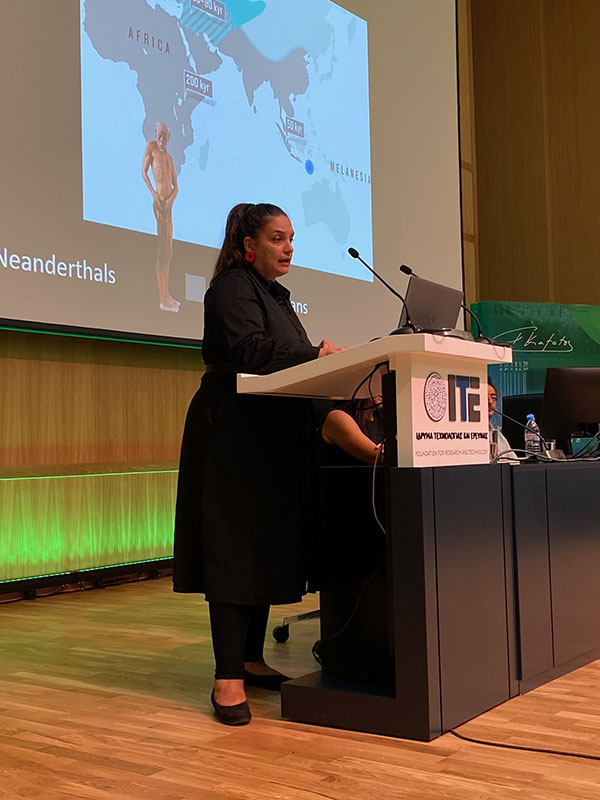
The day culminated in the highly anticipated Kafatos Lecture by Nobel Laureate Svante Pääbo, entitled “A Neanderthal Perspective on Human Origins and Health: How Ancient DNA Is Revealing New Insights into Disease and Biology”.
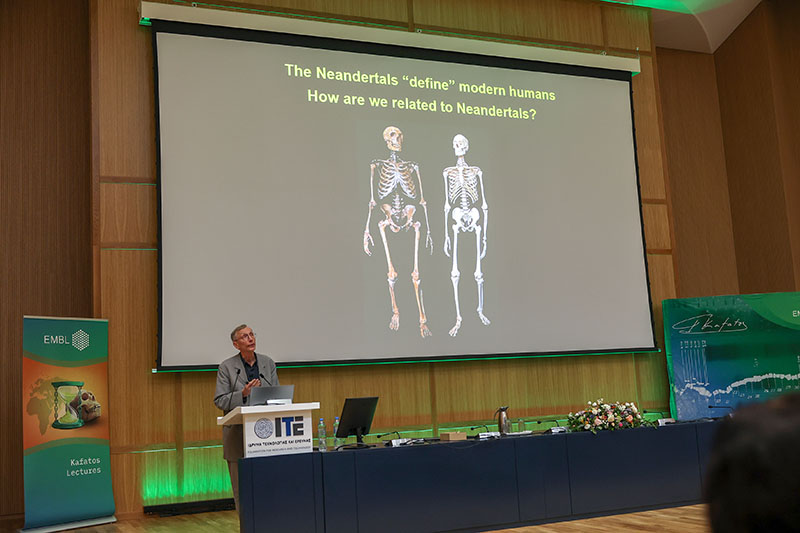
From reconstructing ancient populations to uncovering the genetic connections between humans and our extinct relatives, the day demonstrated the extraordinary power of ancient biomolecules to bring our past into sharper focus.
A memorable celebration of science, collaboration, and discovery at IMBB-FORTH — reminding us that understanding where we come from can offer profound insights into who we are today.