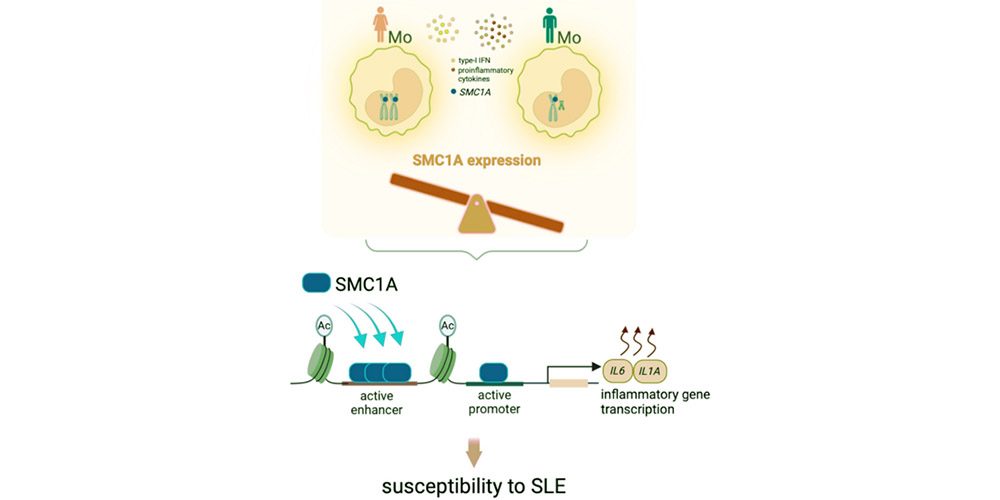
This study identifies SMC1A, an X-linked cohesin subunit and chromatin architectural factor, as a potential mechanistic link between sex bias and inflammatory dysregulation in systemic lupus erythematosus (SLE). Researchers from the Laboratory of Rheumatology, Autoimmunity and Inflammation at the University of Crete Medical School and IMBB-FORTH, together with collaborators from the Biomedical Sciences Research Center ‘Alexander Fleming’, showed that SMC1A is more highly expressed in monocytes from women with SLE than in those from men with SLE, healthy individuals, or patients with ankylosing spondylitis, a non–sex-biased autoimmune disease. Under lupus-relevant inflammatory stimulation, SMC1A is redistributed to active enhancers of immune and inflammatory genes, where it appears to promote their transcription. This enhancer-associated activity is linked to increased expression of lupus-relevant inflammatory pathways and higher secretion of cytokines such as IL-6, supporting a direct role for SMC1A in amplifying monocyte activation. Functionally, the work suggests that SMC1A is not simply a marker of sex-biased expression, but a disease-relevant chromatin regulator that helps shape the pathogenic inflammatory program of lupus monocytes. The significance of the study lies in moving beyond descriptive sex differences toward a specific epigenetic and transcriptional mechanism that could help explain why inflammatory pathways are accentuated in women with SLE and may eventually inform new therapeutic strategies targeting chromatin-mediated immune activation.