Current Research Interests:
1. The role of Promyelocytic Leukemia Protein (PML) in Neural Stem Cell Physiology and Stress Response
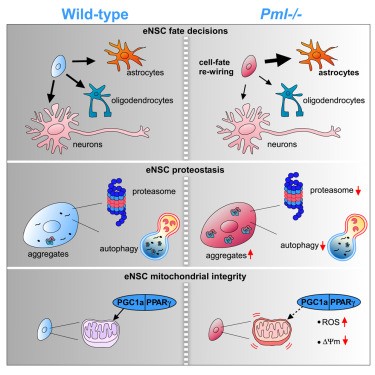 | PML-deficient neural stem cells (NSCs) are significantly more susceptible to mitochondrial and amyloid-induced stress than control cells. Transcriptomic analyses revealed that PML loss compromises proteostatic and mitochondrial pathways. Specifically, PML deficiency results in reduced autophagic flux and proteasome activity, leading to protein aggregate accumulation and stress-induced cell death. In addition, loss of PML disrupts mitochondrial integrity—evidenced by impaired respiration, reduced membrane potential, and altered mitochondrial morphology—likely driven by decreased PGC-1α expression and attenuated PPARγ signaling. |
2. PML is a protective factor against neuroinflammation and neurodegeneration
Using an acute model of neuroinflammation via intracerebroventricular (ICV) injection of Aβ in WT and Pml -/- mice we have shown that in the absence of PML there is impairment in mounting an anti-inflammatory response and increased neurotoxicity. Furthermore, genetic ablation of PML in the 5XFAD mouse model revealed that loss of PML exacerbates multiple hallmarks of AD pathophysiology, including amyloid burden, neuronal toxicity, and cognitive decline.
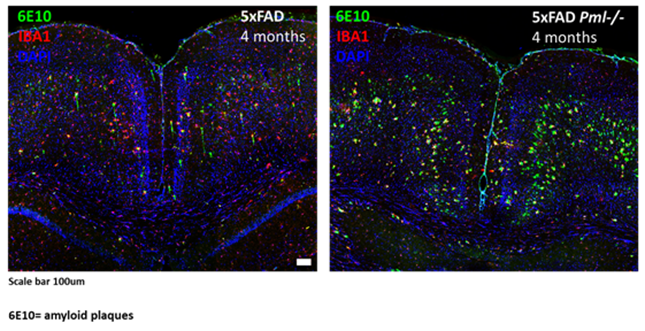 | Representative brain sections from 4-month-old 5XFAD and 5XFAD Pml⁻/⁻ mice were immunostained with 6E10 (amyloid), Iba1, and DAPI. |